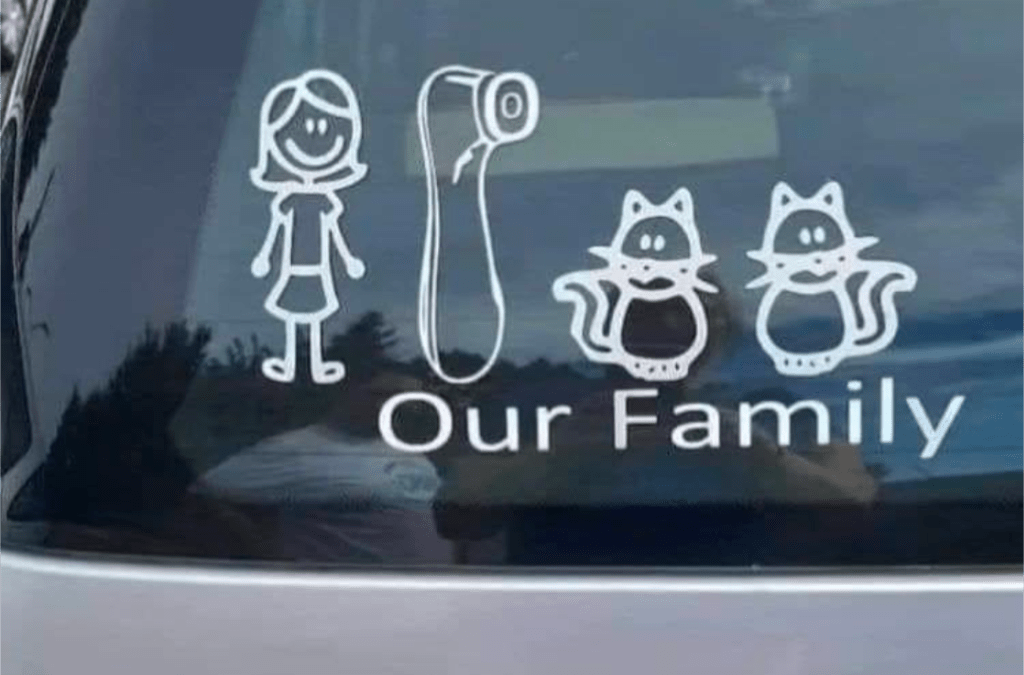
A few weeks ago, a 2021 interview with Trump’s running mate J.D. Vance resurfaced in which he took aim at Vice President Kamala Harris and some other high profile female politicians claiming:
“We’re effectively run in this country, via the Democrats, via our corporate oligarchs, by a bunch of childless cat ladies who are miserable at their own lives and the choices that they’ve made.” Vance adds: “And so they wanna make the rest of the country miserable, too.”
Since it is International Cat Day today, this childless cat lady thought she should put in her two cents on the topic.
The Long and Eventful History of the Crazy Cat Lady
In order to put Vance’s comment into context, one has to look at the discourse of the (not yet childless) “cat lady” in culture and popular culture. Women and cats were already intrinsically connected way back, in Ancient Egypt, where the goddess Bastet was often depicted as either a cat or as a woman with a feline head. While it certainly has its upsides to be portrayed as a goddess, this “felinization of women” was already associated with a power “threatening and necessary to suppress”, claims Corey Wrenn, a sociologist from the University of Kent in her 2018 analysis of gendered feline imagery.
Fast forward quite some time and we get to the Middle Ages, where the public hunt for witches and crazy cat ladies really gained momentum. In 1566, Agnes Waterhouse, considered to be the first woman executed for witchcraft in England, reportedly confesses that she had her cat “Satan” kill livestock. She also reportedly claimed that Satan’s former owner – obviously also a woman and obviously also a purported witch – went even further. When her 6 months old child was disturbing her peace, she simply had precious little Satan kill it. When her husband later came between her and the quietness she was seeking, she was a bit more merciful. Instead of having Satan the cat kill him, she only cursed him with lameness. Here’s an account of this:
“After they were married they lived not so quietly as she desired, being stirred (as she said) to much unquietness and moved to swearing and cursing, wherefore she willed Satan her Cat to kill the child, being about the age of half a year old and he did so, and when she yet found not the quietness that she desired, she willed it to lay a lameness in the leg of this Francis her husband, and it did in this manner. It came in a morning to this Francis‘ shoe, lying in it like a toad, and when he perceived it putting on his shoe, and had touched it with his foot, he being suddenly amazed asked her of what it was, and she bade him kill it, and he was forthwith taken with a lameness whereof he cannot healed.”
And this is not the only account of “witches” supposedly having used cats for their wrongdoings. It must have been a quite popular trope as even Shakespeare supplied MacBeth’s witches with a magical, furry, purring companion.
Fast forward another few hundred years and we get to the early 20th century. In April 1916, Alice Snitzer Burke and Nell Richardson set off for the ultimate 10,000 mile US road trip to advocate for women’s right to vote.
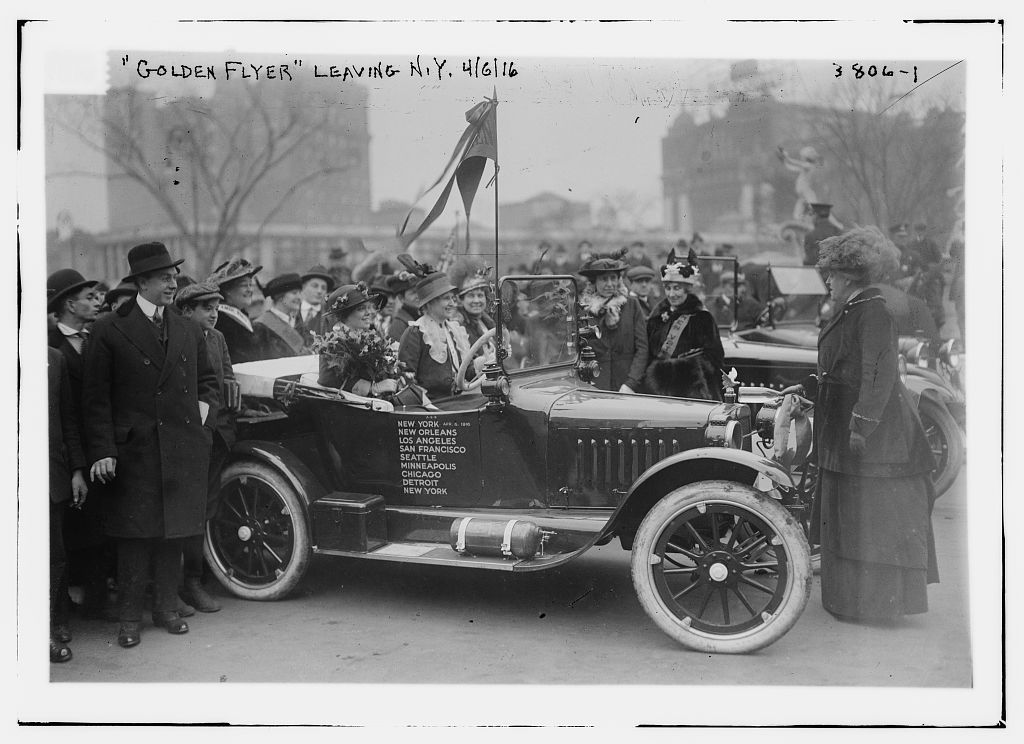
And what did they bring? You guessed it! Their kitten mascot “Saxon” (named after the manufacturer of their car). Obviously, while the trip drew attention to the noble cause, it also lent itself to anti-suffrage propaganda. Just like the witch, the cat-owning feminist started to represent some kind of dark, subversive force that urgently had to be contained. It was the start of an anti-feminist smear campaign that claimed that an interest in voting made women totally neglect their “female duties”, first and foremost consisting of taking care of their husband, their children, the household – and the cat. Lots of anti-suffrage propaganda posters from that time used images of “emasculated” men wearing aprons, of crying babies and of sick, neglected cats. See some examples here.
Where Do We Stand Now?
Today, pop culture still surrounds us with images of crazy cat ladies. We have cutsy but evil Dolores Umbrige and her childlike infatuation with cats in the Harry Potter Series, we have single woman Miranda in Sex and the City fearing she might die of a heart attack and being eaten by her cat and – first and foremost – we have Eleanor Abernathy, failed feminist turned crazy cat lady in The Simpsons with her tell-tale past:
“When she was eight, Eleanor Abernathy was a smart and ambitious young girl who wanted to be both a lawyer and a doctor „because a woman can do anything“. She was studying for law school at 16, and by 24, she had earned an MD from Harvard Medical School and a JD from Yale Law School. However, by 32, suffering from burnout, she had turned to alcohol, became obsessed with her pet cat, and would randomly take to cutting pieces of her own hair. By the time she was 40, she had assumed her present state as a drunken, raving lunatic.”
(Note that she both loves and abuses her cats, as she is seen throwing them or scrubbing them with a washboard – throwback to anti-suffrage propaganda?)
With all this in mind, it is really not surprising that Vance follows in the footsteps of previous anti-feminist politicians and like-minded influential people. After all, what might seem like a silly little trope at first glance, is still a powerful story of woman subverting established power structures and role models. He might not go as far as to call the “childless cat lady” “crazy” but he strongly implies that her place is outside of society, that she is persona non grata. The story is: If you opt for a cat instead of offspring, you cannot represent this country.
However, what Vance probably did not anticipate is the ruthless revenge of the “childless cat lady”. In a genius move, Kamala Harris’s campaign team simply embraced the term and launched “Childless Cat Lady Club” t-shirts and other merch. It was only a matter of time, before other proud members of the childless cat lady club came to her aid and publicly voiced their support on social media. Actress Jennifer Aniston, for instance, who has previously opened up about her struggles getting pregnant through IVF, wrote on Instagram: „All I can say is… Mr Vance, I pray that your daughter is fortunate enough to bear children of her own one day.“ She added: „I hope she will not need to turn to IVF as a second option, because you are trying to take that away from her, too“ referring to Vance having recently helped to block a bill to establish the right to in-vitro fertilisation.
Personally, I am still hoping that the world’s most powerful childless cat lady will come forward to speak up as well.
In the meantime, I will fully embrace this newly acquired title, add it to my email signature, retreat to the sofa for some cat cuddles and enjoy my childless childfree night with a glass of Pinot Noir.
Burn me!


Kommentar verfassen