New York City has about 150 museums, including more famous ones such as the Metropolitan Museum of Art as well as some oddities as the Museum of the Dog or the Girl Scout Museum. On my list of things to do and see, one rather lesser known museum was fairly high up there: the Lower East Side Tenement Museum.
The museum is based in an old tenement building and it is not so much about the artifacts that are in there but rather about the stories of the building’s former inhabitants. A tenement building according to definition is a building that houses at least 3 units for people that are not related with each other – so basically a normal apartment building. The word „tenement“ however is culturally loaded because it was (and is) used to mainly describe immigrants‘ homes, thereby evoking associations of crowded, poverty-ridden spaces.
Inside the tenement museum you can see a recreation of some of immigrants‘ living and working spaces. In contrast to other museums, you cannot simply enter and take a look at it but have to book a guided tour, which focuses on different aspects of an immigrant’s life. Self-proclaimed feminist that I am, I went for the „Working Women: 100 Years Apart“ one.
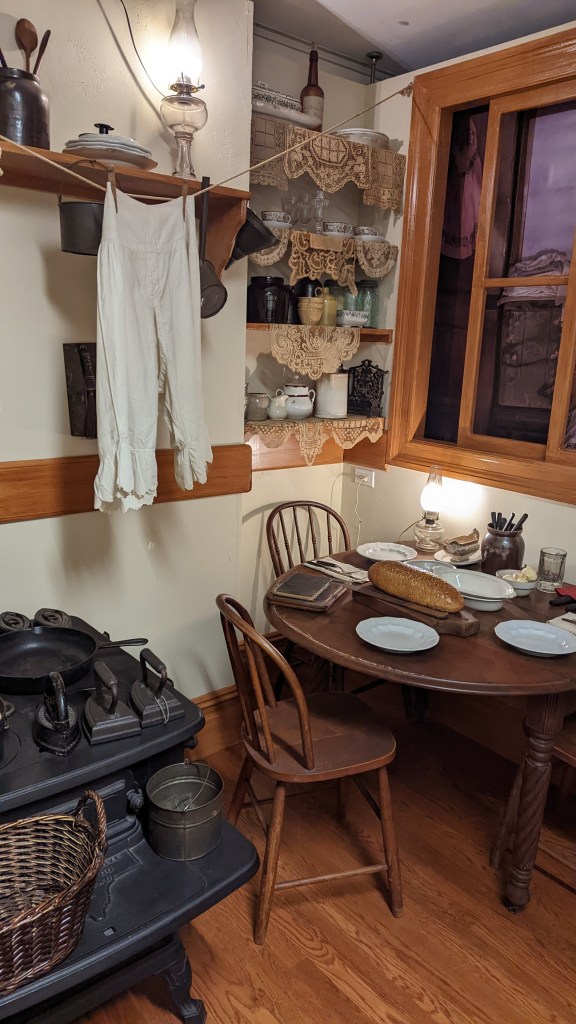
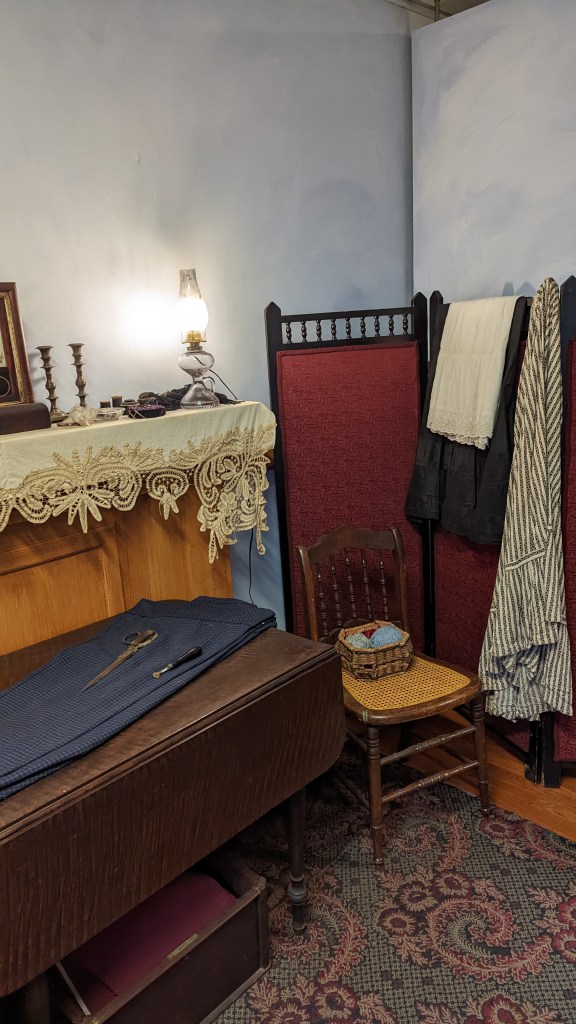
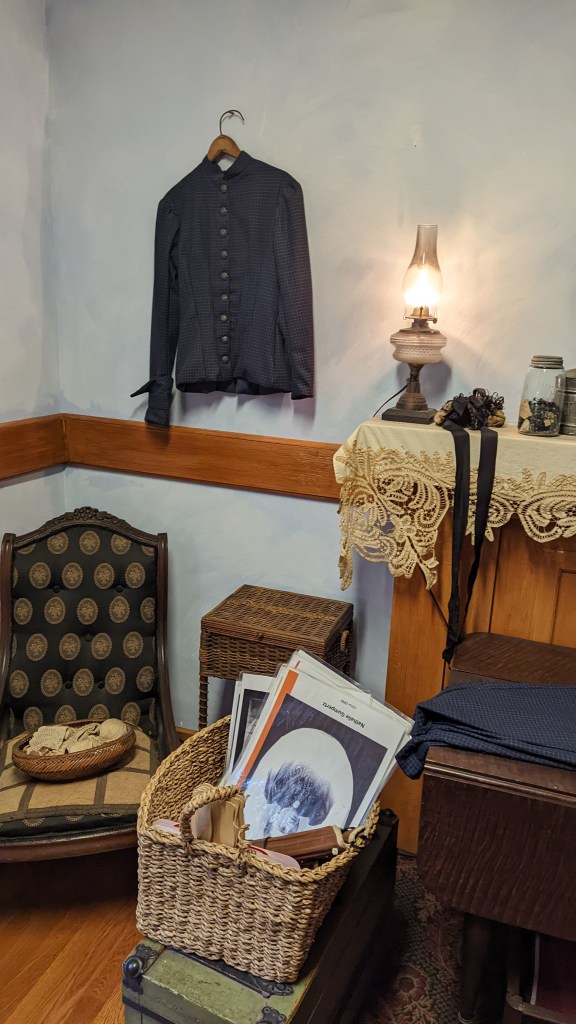
In this tour, we first entered the flat of the German family Gumbertz, who came to New York in the 1870s following the American Dream. In 1873, an economic depression (the Panic of 1873) hit and the Gumbertz family breadwinner suddenly disappeared. This forced Natalie Gumbertz to make a living of her own as a dress maker. Her business flourished and when the family inherited 600$, they were able to leave the Lower East Side and to buy property on Manhattan’s Upper East Side.
A few facts:
- In 1855, there were so many German people living in New York, that it had the third largest German-speaking population in the world (outranked only by Berlin and Vienna). They mainly settled in the East Village, which was then also known as „Kleindeutschland“.
- Kleindeutschlands extinction was accelarated in 1904 by the General Slocum disaster. The General Slocum was a paddlewheeler and it hosted an event to celebrate the end of the school year for the German community. After its departure, a fire had started and more than 1,000 passengers (mostly women and children) died – about one per cent of Little Germany’s population.
- The Gumbertz family had to pay 10$ in rent for their Lower East Side apartment in the 1870s. Fast forward 150 years and this amount of money will now buy you a pack of Mini Babybel.
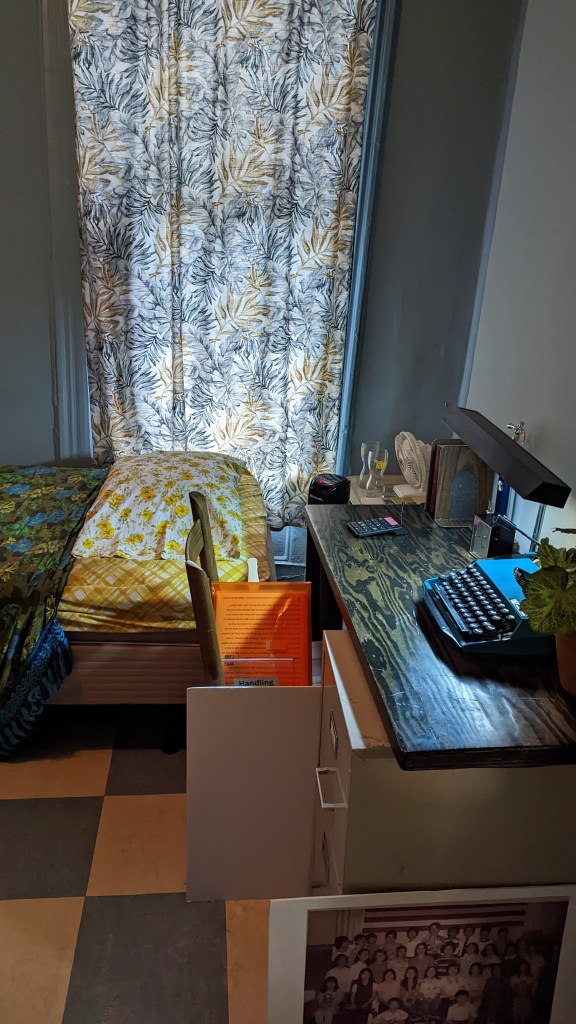
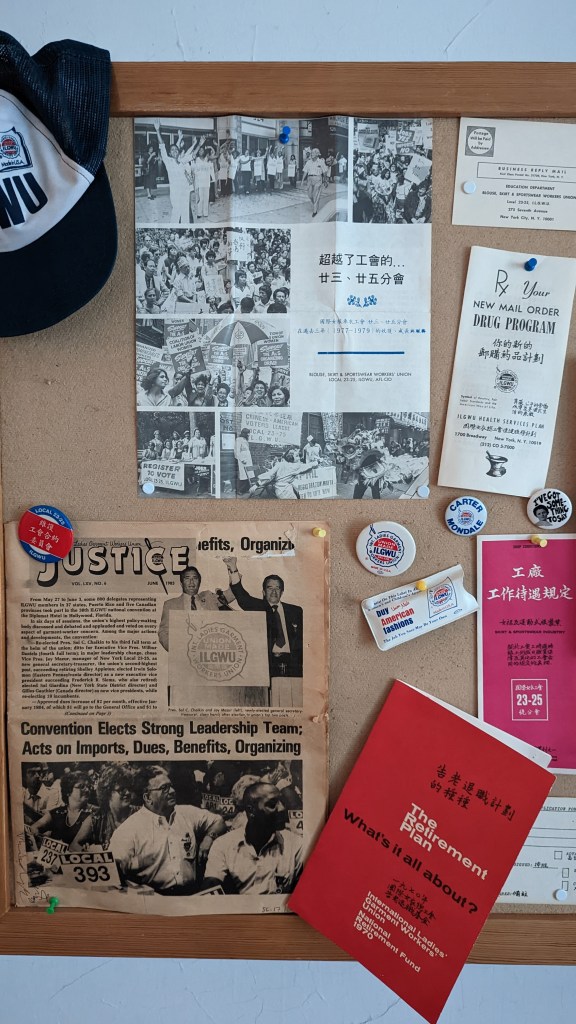
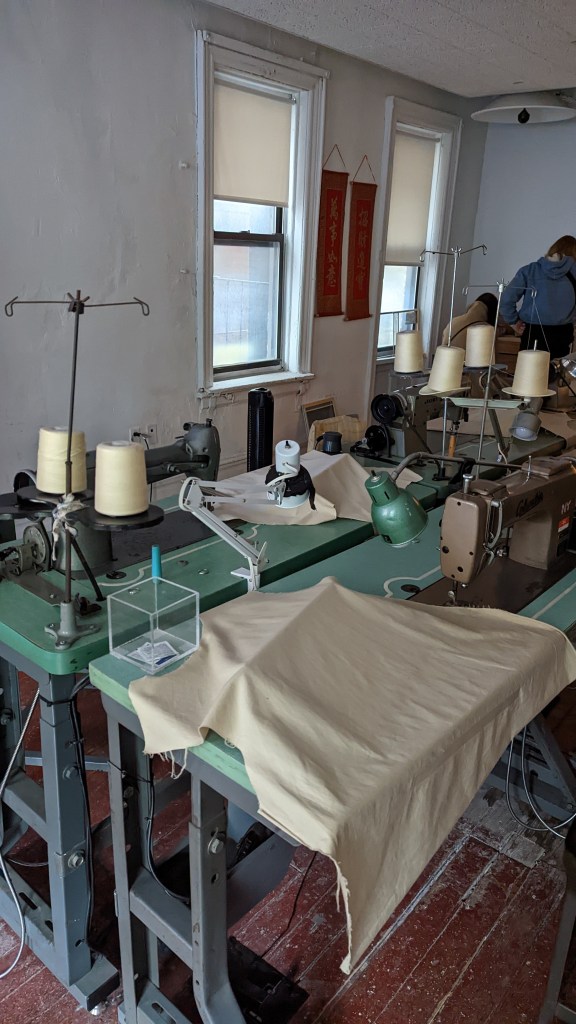
Moving on in the tenement museum, we entered the apartment of the Wong family, which lived in NYC about 100 years after the Gumbertz, in the 1980s. In the 1980s, one income was no longer enough to support a family – especially so on the Lower East Side. So while Chinese immigrant men mainly worked in restaurants, the women worked in the garment industry of Chinatown – and so did Mrs. Wong, the heroine of the museum’s second story.
Working in the garment industry had one big adventage, as garment industry workers were organized in workers‘ unions. In 1982, more than 20,000 garment workers (almost entirely women) marched through Chinatown calling for workers‘ rights – and they were successful. Employers didn’t install wage cuts and they didn’t take away holidays and other key benefits, as originally planned.
Today, Chinatown is no longer the center of the garment industry, as overseas production is simply cheaper. Instead, the area is facing gentrification and more and more of the original inhabitants are forced to leave. Mrs. Wong, however, still lives on the same building block that also hosts the tenement museum.
 Couch Potato Chronicles