According to a definition by National Geographic, Cultural Memory „is a form of collective memory shared by a group of people. Cultural Memory is often stored in objects, such as museums or historical monuments.“
I am just sitting on a train from Washington DC to Philadelphia and I can’t help but wonder why American culture seems to be so invested in the past and so uber invested in creating Cultural Memory. Maybe it is so alien to me because I am German and generally our past is condensed to WWII and deemed „not very pleasant“ (to put it mildly). Yes, we have monuments. Yes, we have museums. Yes, we do remember – but differently. Let’s put it this way: If there was a Cultural Memory party, the US would be John Travolta confidently rocking the dancefloor in a sequined, skin-tight suit flashing flags of every single US president, while Germany lingers in a dark corner, sipping her Radler, trying to avoid eye contact at all cost and only showing other party guests a faded photo of Konrad Adenauer when directly asked for it.
Here in America – and in Washington DC in particular – there seemed hardly any room for present and future. Everything was so occupied by events long gone and some not so long gone. Even the Black Lives Matter movement was already turned into „just another photo opportunity“. And don’t get me wrong: I fully agree with the decision to rename the road leading up to the White House „Black Lives Matter Plaza“ but I can’t shake the feeling that by turning something into a sight/photo opp, you also somehow imply „Ok, folks, it’s over. Let’s cross the T’s and dot the I’s on the Wikipedia article already.“
The Monuments
I first got that feeling of overwhelming historicity when taking a (very) long walk to see all the monuments. I started at the White House (much smaller than I expected), then moved on to the Washington Monument (slightly bigger than I expected) and then made my way to the Capitol. So far, so good. The true culture shock, however, hit me on the Western side of the National Mall. The Vietnam War Memorial featured a wall inscribed with the name of every person who fought on the US side and who got killed in combat. If you lost a loved one, you could consult a book, look up the name and see exactly at which part of the wall the person’s name was inscribed. The Korean War monument also featured thousands and thousands of names of people, who got killed in Korea. The WWII memorial was inscribed with phrases such as „Victory by Sea“ and „Victory by Land“.
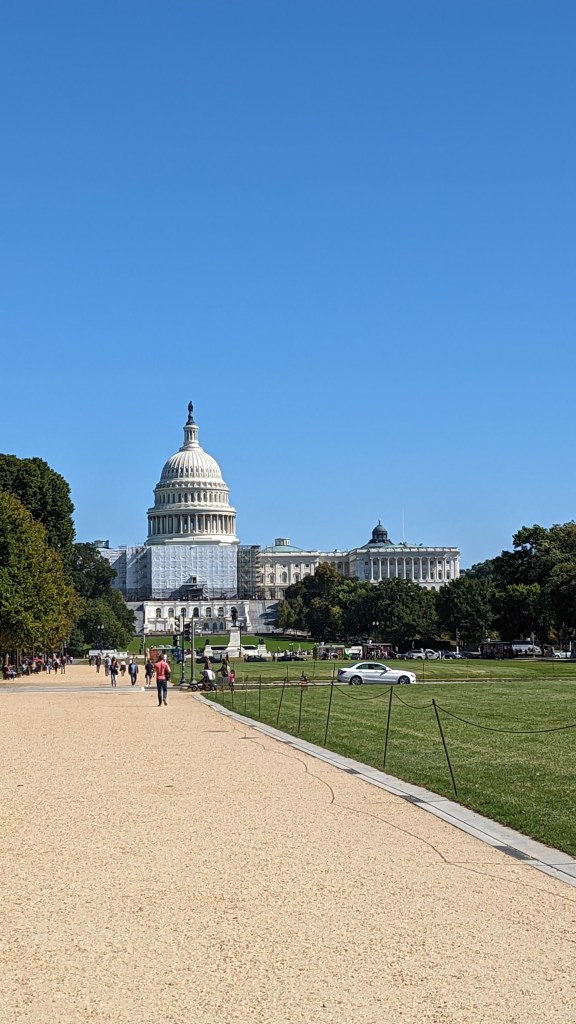
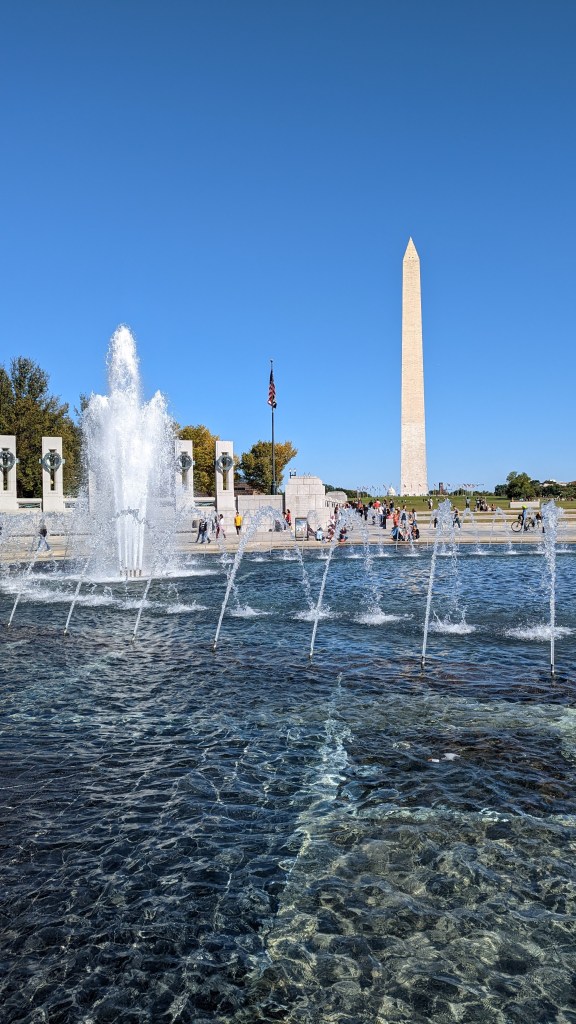
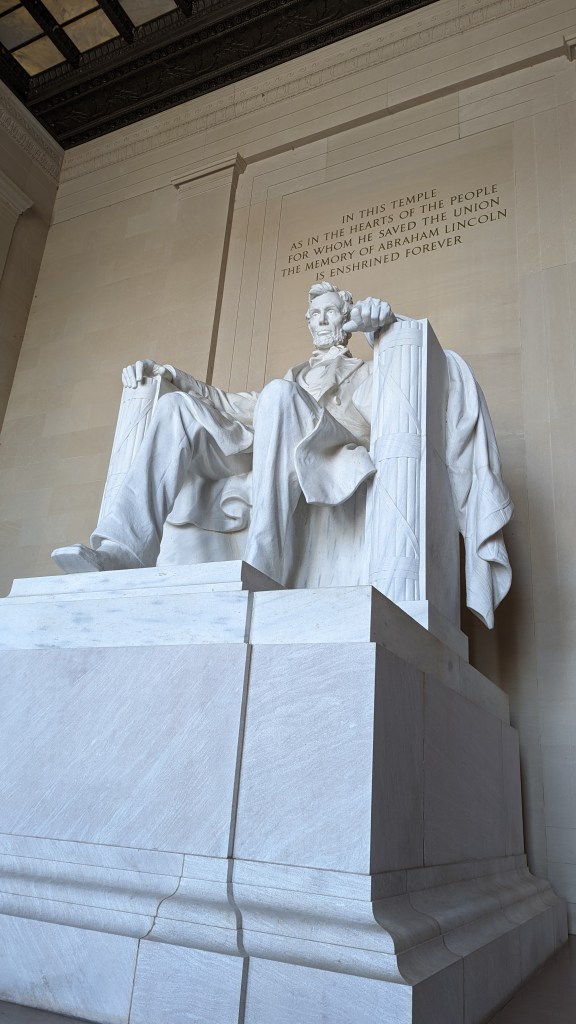

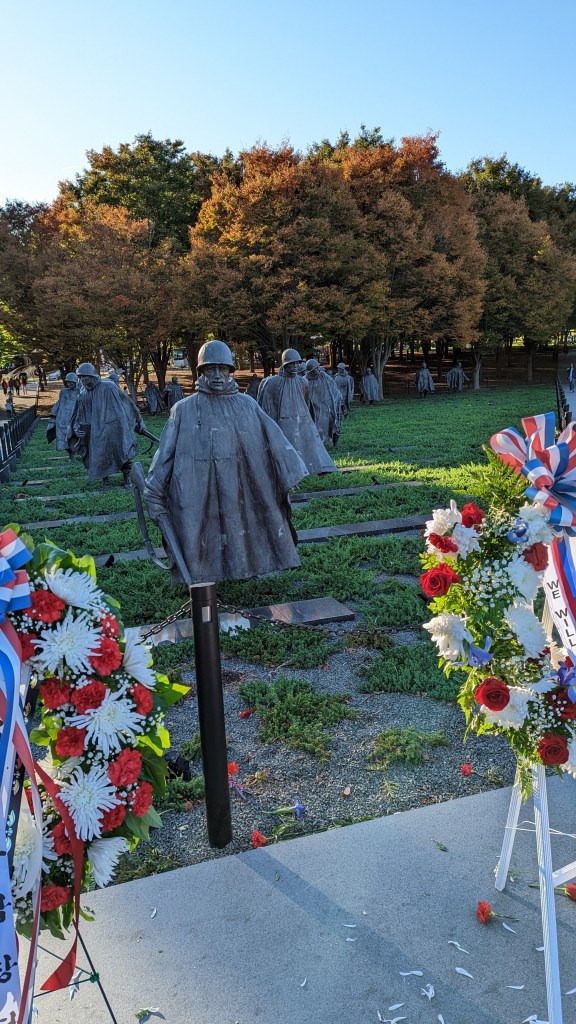
Obviously, apart from wars, the American Cultural Memory also does its best to remember past presidents and other people of importance. Lincoln has a memorial, Martin Luther King has one, Thomas Jefferson has one – even Albert Einstein has one. While most of them consisted in a statue surrended by many famous quotes of said person, Franklin D. Roosevelt’s monument was the only one that I though provided some context. I liked his memorial in particular as it was constructed as a mini outdoor museum. It guided you chronologically through his life and works, starting with a „prologue“ of a statue of him in his wheelchair. He tried to keep his worsening sickness from the American people and always had himself depicted without his aid. However, after his death, pressure from physically impaired groups and organisations grew and they demanded a more honest depiction – and they should get it. From this starting point, the monument consisted of a little path at times lined with waterfalls, quotes and a bit of context provided in the form of year dates and photos. I particularly liked that the whole monument was accessible: little models of the statues could be touched and thereby allowed blind and visually impaired people to take it in as well and the path was wheelchair accessible. You also had audio commentary at some stations. (Here’s a YouTube Tour of it, if you want to see it: Click!)
Arlington Cemetery
Arlington Cemetery is a giant cemetery in West Washington, at which basically everyone who served in the U.S. military and who left on good terms with the military can demand to be buried. As many things in America: Arlington was way bigger than I expected. I tried to look for a good comparison and here’s one for all my Nuremberg based readers: Arlington is nearly 4 times the size of Nuremberg zoo. Arlington features about 400.000 graves with 27-30 being added every single day from Monday to Friday (that is about 6.900 new graves each year). I loved walking around Arlington Cemetery (which is free btw), although it is certainly not the place to be during a zombie apocalypse.
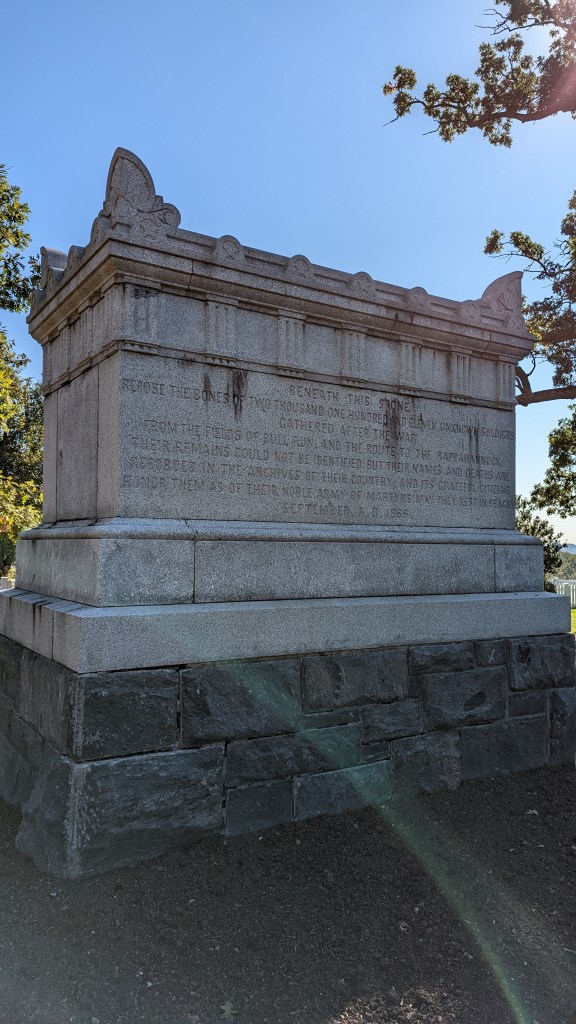
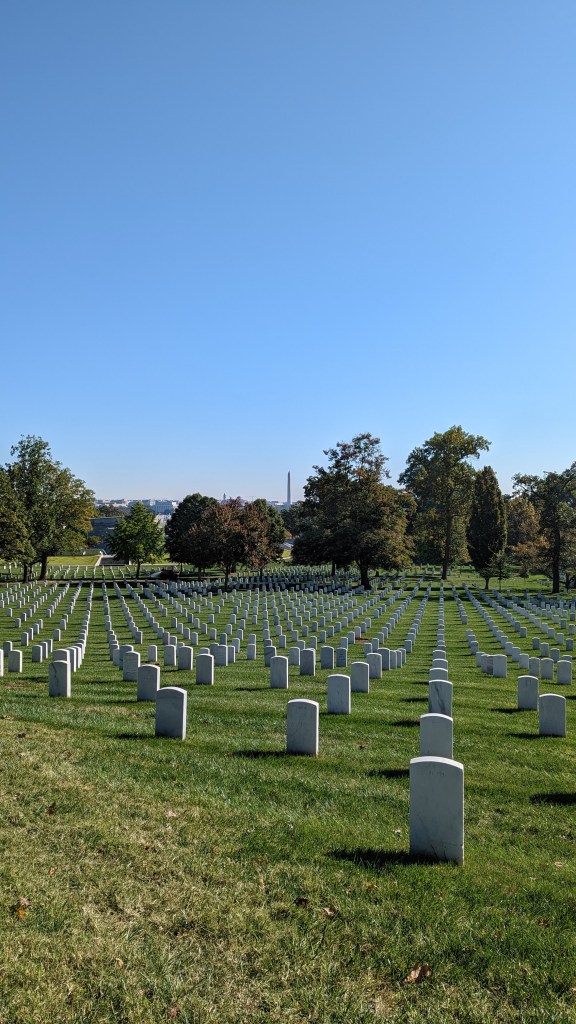
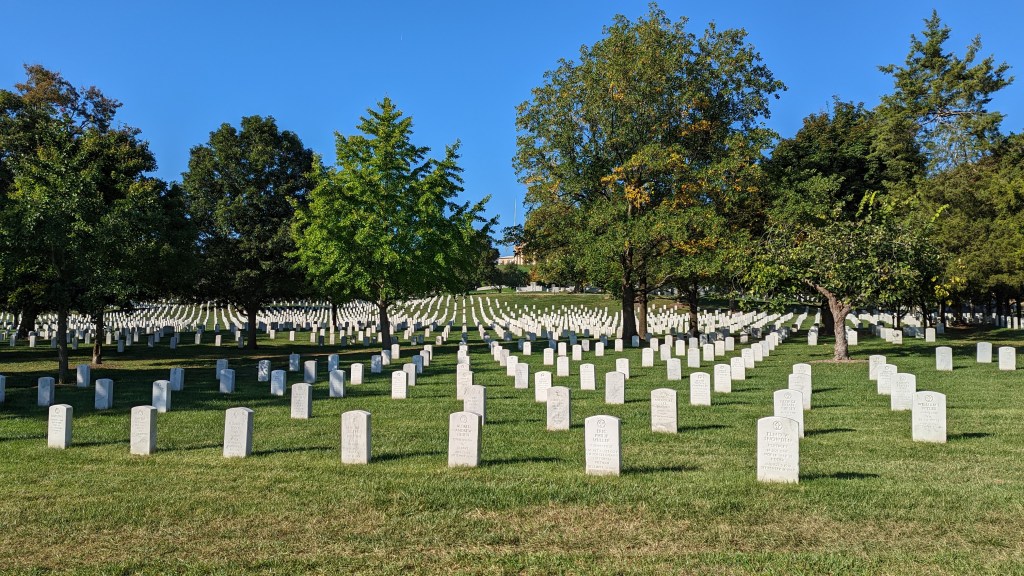
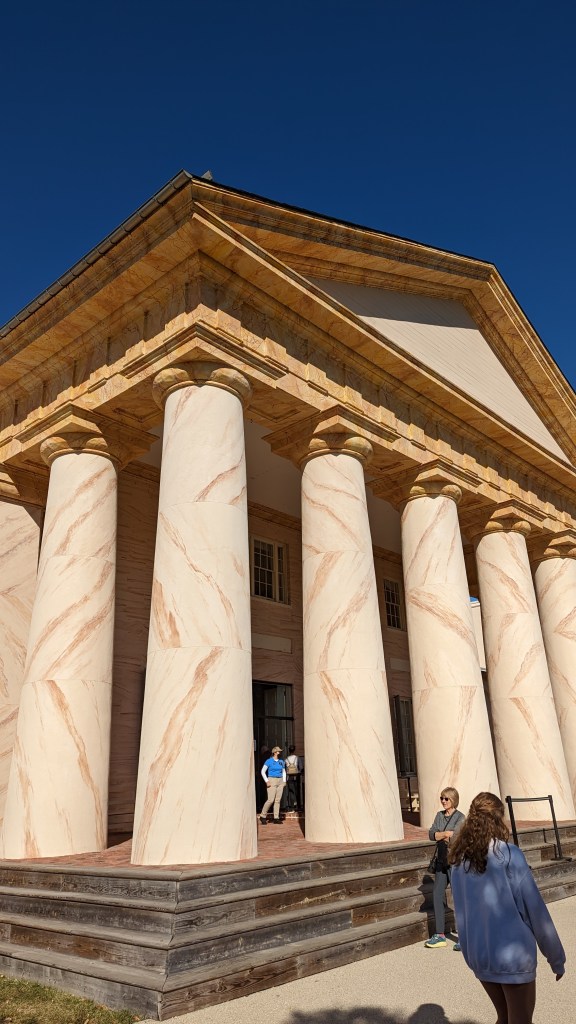
Once upon a time, the area around Arlington House (which is still there and now hosts a small museum) was owned by General Robert Edward Lee. He came into Arlington’s possession by marrying Mary Custis, a direct descendant of Martha Washington. Despite living just outside of Washington, he and his family were firm believers in slavery and had enslaved people run Arlington House. Apparently, influential friends told them to simply hire staff but they refused. When they wanted their house to look a bit like the White House but didn’t have the money for real marble, they simply bought plain stones and had the enslaved men and women of Arlington handpaint them to make them look like the real deal. When Civil War came and pressure on Lee and his likes grew, Virginia militia occupied Arlington estate and he and his family had to flee. The enslaved, however, stayed behind and hosted a Freedmanstown at Arlington. It was also the enslaved people of Arlington who dug the first graves here, when other Washington cemetaries ran full, and who started what would later become Arlington Cemetery (which was aquired by the US government in 1864).
Amonst Arlington’s more famous gravesites are those of John F. Kennedy and his wife Jackie, the tomb of the unknown soldier and (my personal favourite) Supreme Court Justice Ruth Bader Ginsburg.
Cultural Memory: The Winner Takes it All
Let’s come back to National Geographic’s idea of Cultural Memory and to what they have to say about its function. They claim: „Like all forms of memory, cultural memory has important functions. For example, it crystallizes shared experiences. In doing so, cultural memory provides us with an understanding of the past and the values and norms of the group (or more accurately groups) to which we belong. It also creates a form of shared identity and a means for communicating this identity to new members. The most powerful forms of cultural memory may involve recollections of past trauma experienced by groups of victims.“
When I read the last part of that quote, I kind of understood why I had a weird, somehow uncomfortable feeling checking out both the Monuments and Arlington. The US does remember past trauma but never in the role of its victim. And me – as a German – had mainly looked at memorials from the viewpoint of the perpretator (e.g. Holocaust Memorial in Berlin). In America, to me all its markers of Cultural Memory screamed: „We overcame! We’ll keep on fighting! Nothing can bring us down!“ There was very little mourning, very little context, even less criticism, but lots of patriotism. Maybe this kind of remembrance made the guy I saw at the 9/11 memorial in NYC buy a t-shirt saying „USA: Back to Back World War Champs“ (in classic football shirt design) and take a smiling selfie with it in front of the remembrance pools.
The US – at least in these two examples of Cultural Memory – markets itself as a nation shaped by war and often victory – and the introvert, quietly-off-beat-dancing-in-a-dark-corner German in me can’t help but find it uncomfortable.
 Couch Potato Chronicles