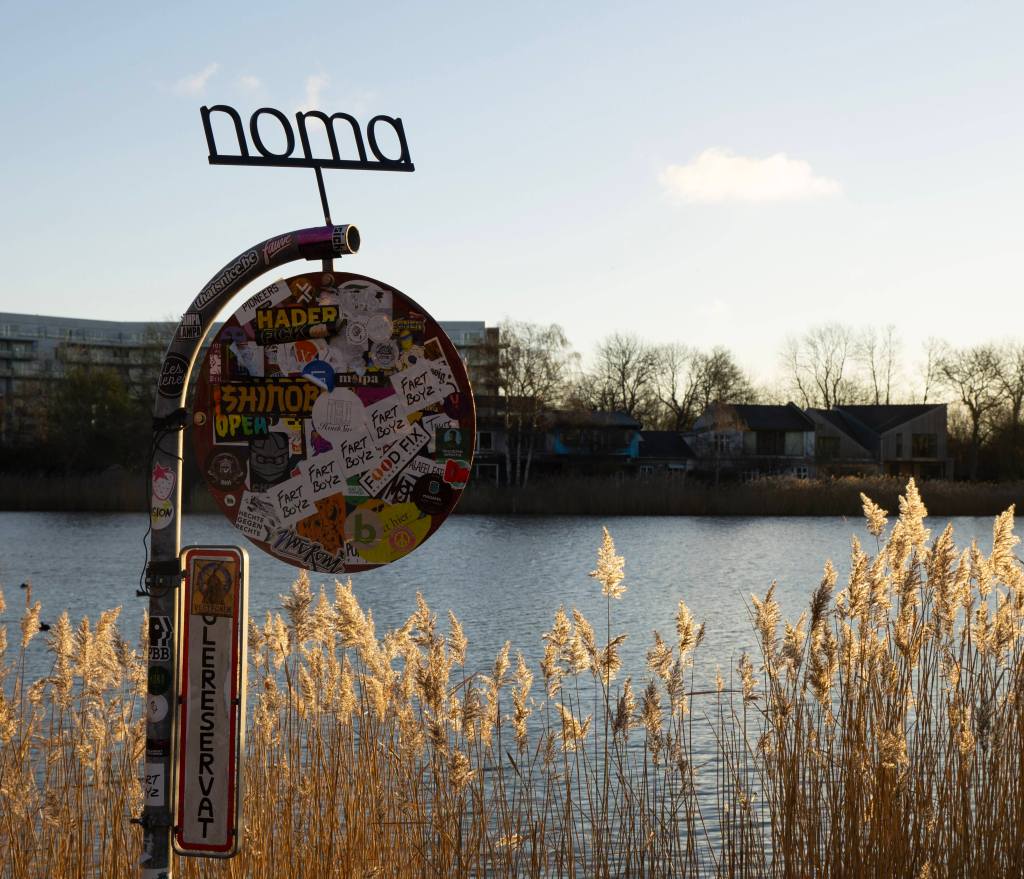
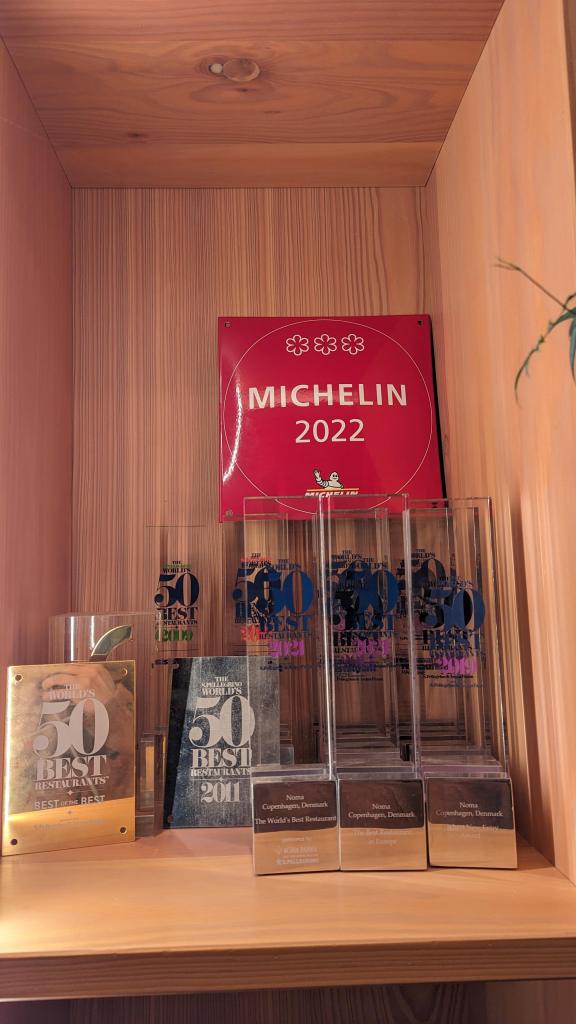
How do you start an article about Noma, when it seems like everything has already been said before? The Copenhagen restaurant, founded by Rene Redzepi in 2003, pretty much transformed the concept of fine dining: they got rid of the white table cloth, they introduced a more relaxed style of service and hospitality, they abolished strict dress codes and they broke with the rules of French cuisine instead focusing on local ingredients they had at hand and using techniques such as fermentation to modify them.
The influence of 3-Michelin-starred Noma on other fine dining restaurants cannot be overestimated and it is this reputation that put it on the map for foodies all over the world – me included.
The Road to Noma: How to Get a Table
Getting a reservation at Noma is notoriously hard and it got even trickier when Redzepi announced that Noma will close by the end of 2024. In the words of one of my fellow diners: „Getting those Taylor Swift tickets was easier than booking a table at Noma.“ (I asked him whether he would sell me the Taylor Swift Tickets but he said no. Rude!)
However, it is not impossible but you have to be quick and you should subscribe to the Noma newsletter or follow their Instagram account. When the reservation window opens, all the tables for the upcoming season (which spans around 4 months) are put on sale at the same time. A few tricks will help to score a table:
- you should be flexible timewise
- create your account for Tock (their booking app) before the reservation window opens to avoid the registration process
- avoid weekends and go for weekdays instead
- get some co-workers to frantically click on random days for you as well 😉
I was lucky right away but it certainly helped that I was a single diner. At Noma, you can book a single seat but you will be placed at the communal table in the lounge area with 3 other diners. I didn’t mind that at all because I had made good experiences with a similar concept in New York (click here for my Atomix review) before.

The Menu: What Food Is Served at Noma?
Noma is known for not shying back from serving things like duck brain presented in an actual duck head or a duck „wing“ still attached to the feathered wing in the past. So I was neither shocked nor surprised to find a guinea fowl in a salt crust already sitting at my table for display.
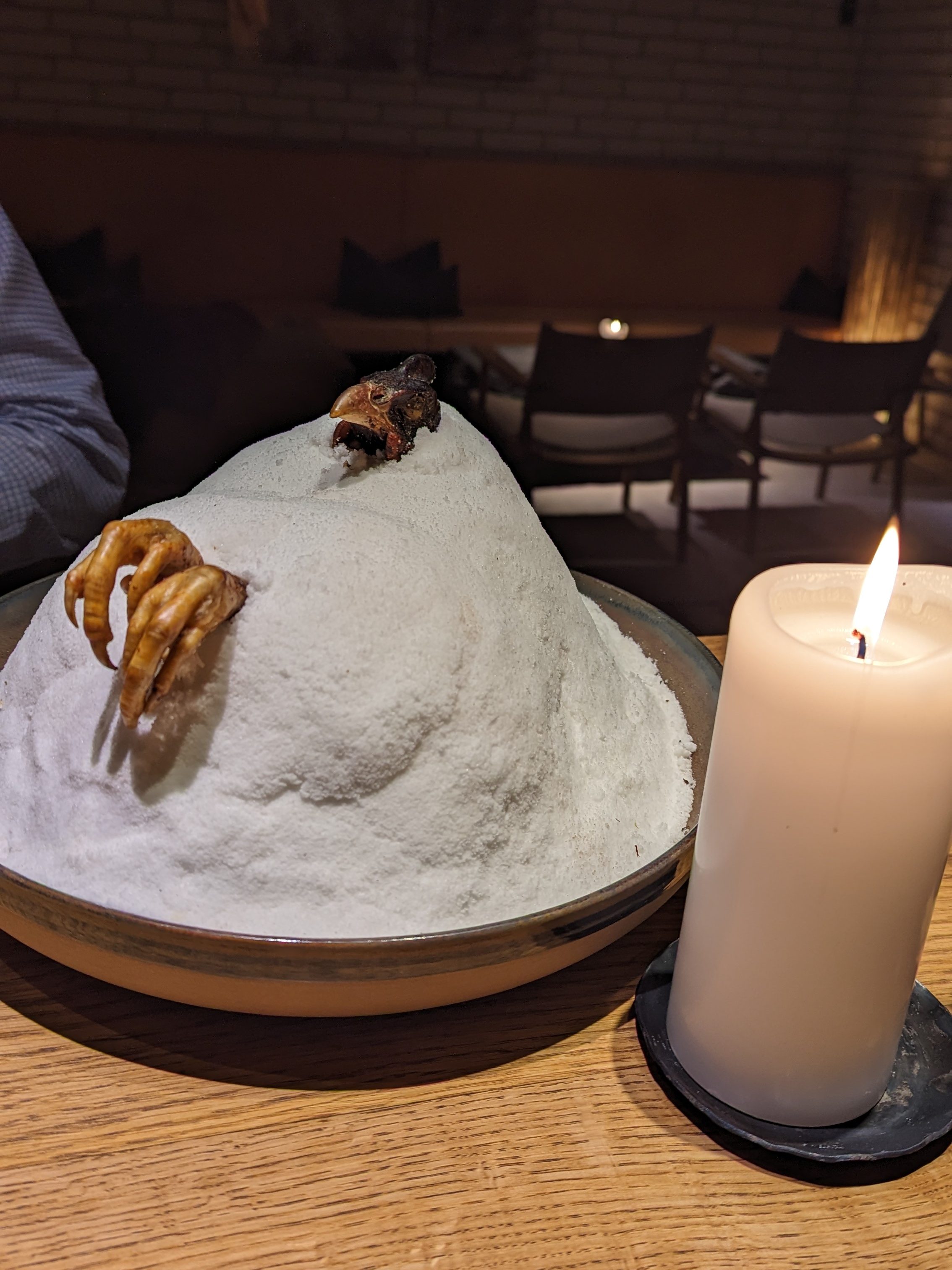
After my fellow diners and me were served water and the first glasses of wine from the wine pairing appeared, the waitress announced that said guinea fowl (I named it Herbert) would be our first course of the night. It was swiftly taken back through to the kitchen and was brought back in form of tranches of breast and thigh with a few strips of caramelized skin and egg in nettle sauce. We were encouraged to use our hands to eat and to dip the juicy meat into the thick and sugary hazelnut milk that accompanied the dish.
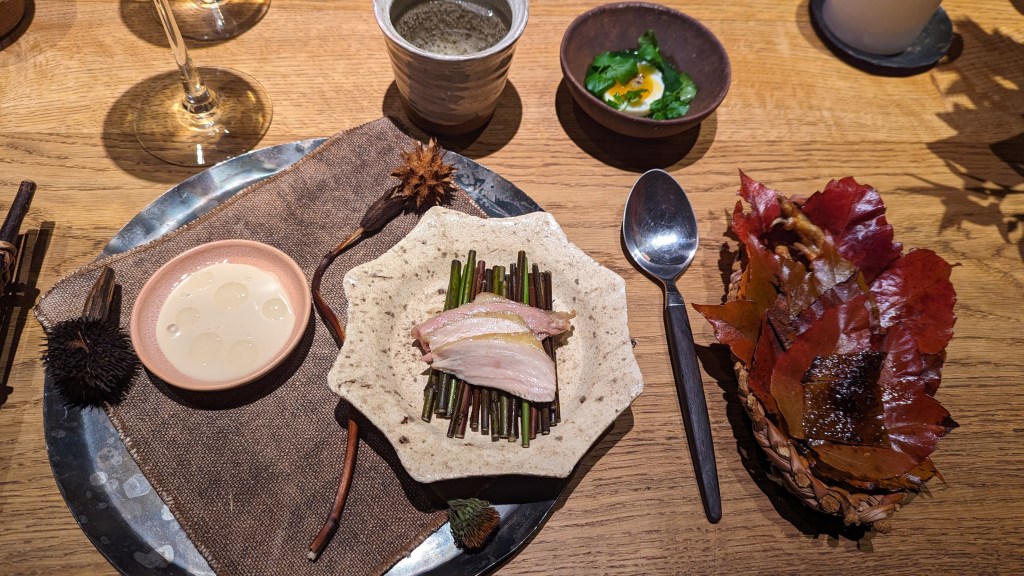
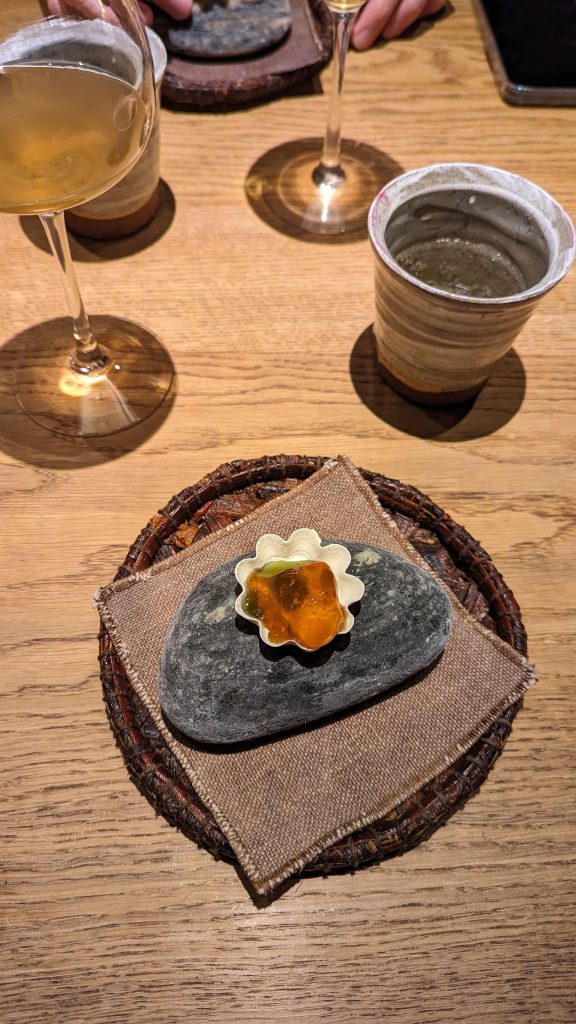
This first course was a perfect blueprint for the rest of the night as nuts, herbs and gamey meats would dominate the menu – always accompanied by a surprising hint of sweetness (as here with the hazelnut sauce and the caramelized skin), which would become the leitmotif of the night.
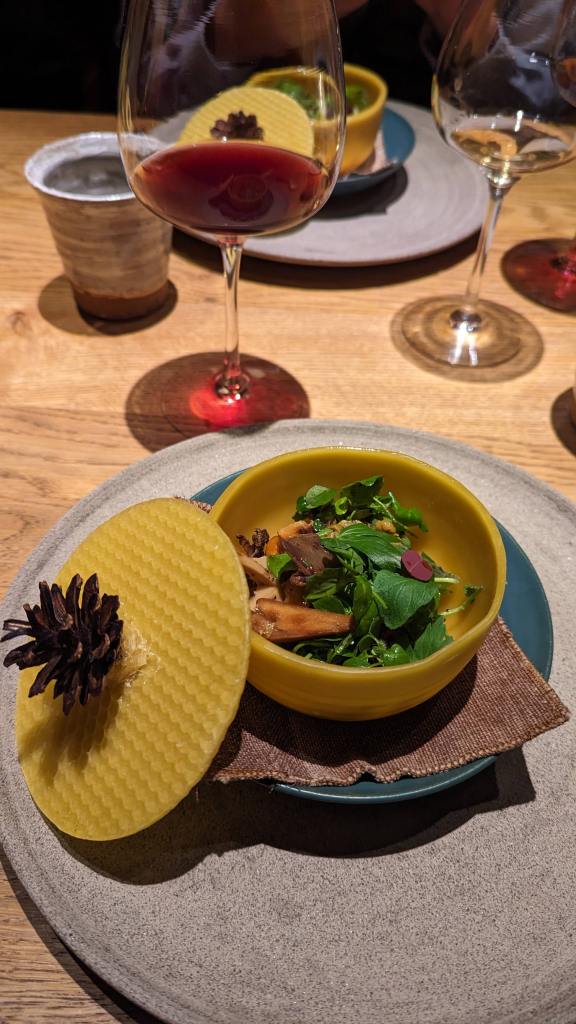
The menu featured roughly 15 courses, which were all in tune with the „game and forage“ motto of the season. A salad of thinly sliced walnuts brought some nutty sweetness and bitter tones which went well with the paired sake.
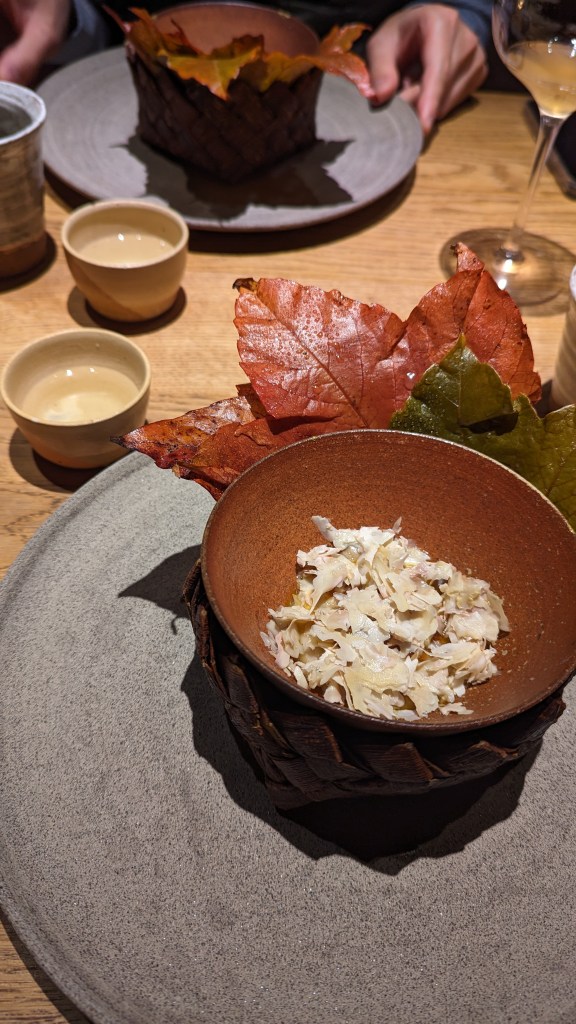
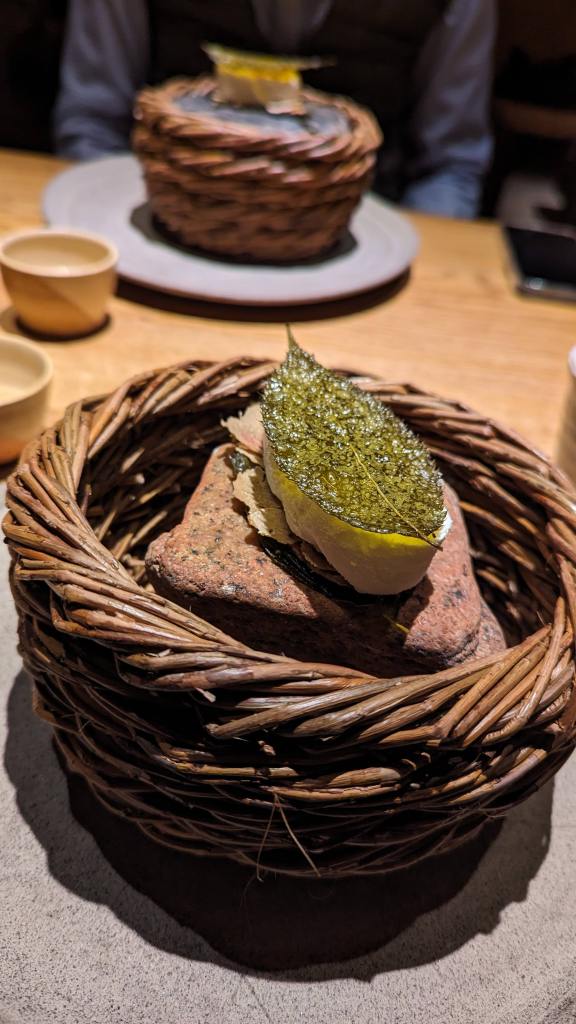
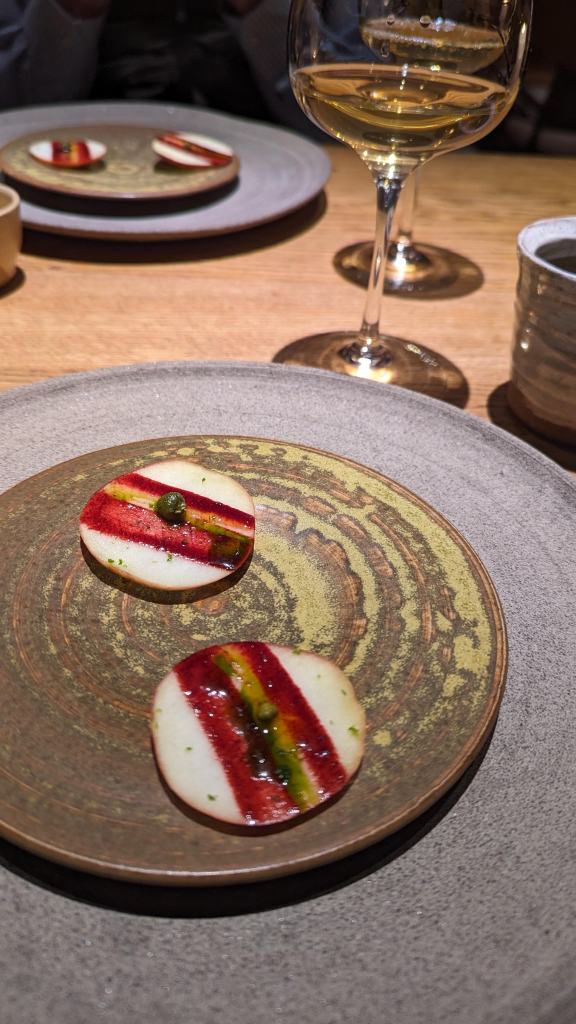
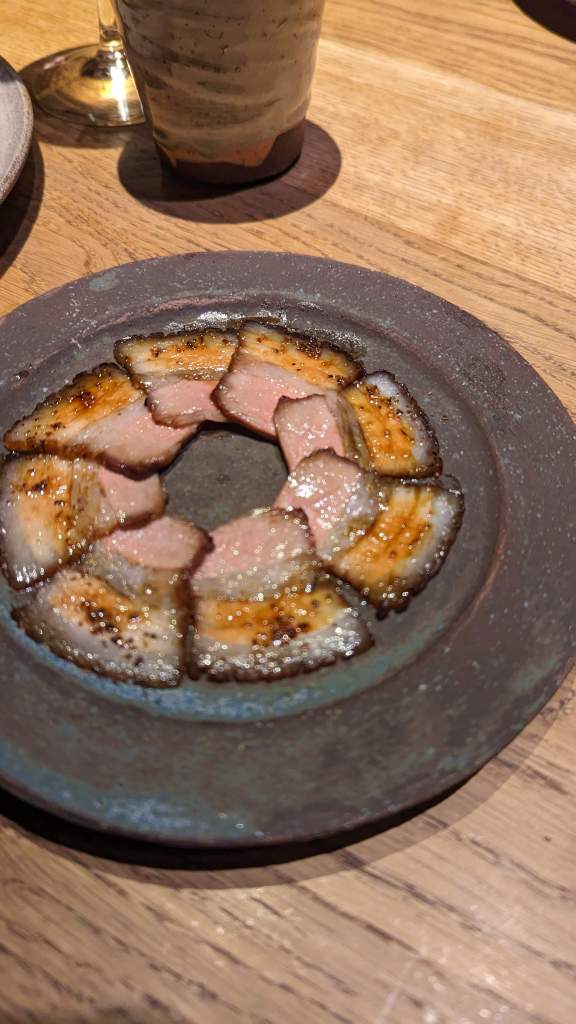
Truffeled cherry leaves served as the outer layers for a frozen cheese sandwich and grilled wild boar belly in mushroom oil (served with apple) added some smoke.
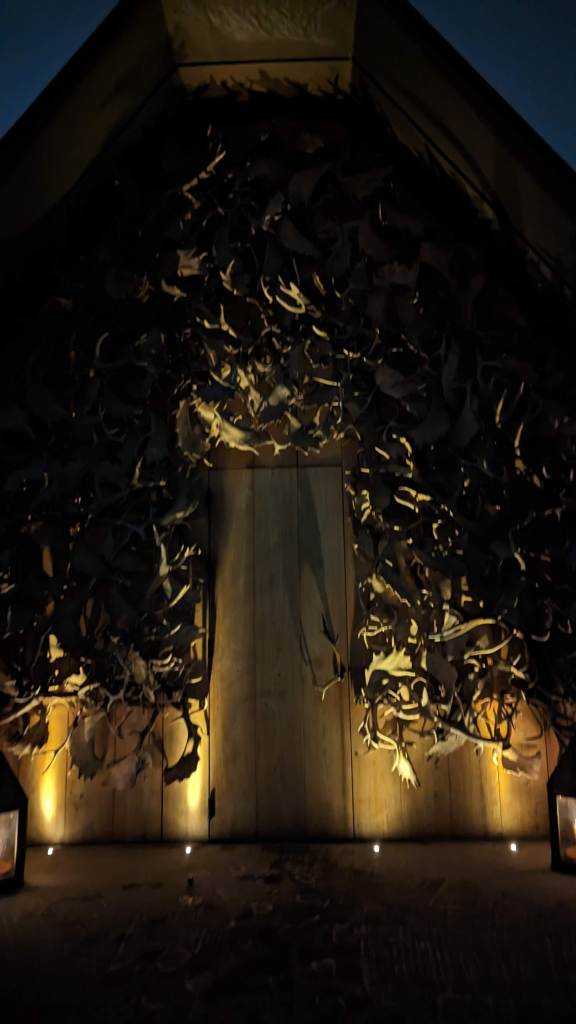
And it wouldn’t be Noma if there weren’t some unusual ingredients as well: A pheasant omelet was filled with reindeer brains and followed by two pieces of reindeer tongue served on the deer’s antlers. The egg sauce that came with it was so succulent that everyone at the table would simply use the antlers as spoons to have more of the sauce. „Shame we don’t have any bread for the sauces“, was something we certainly said more than once that night.
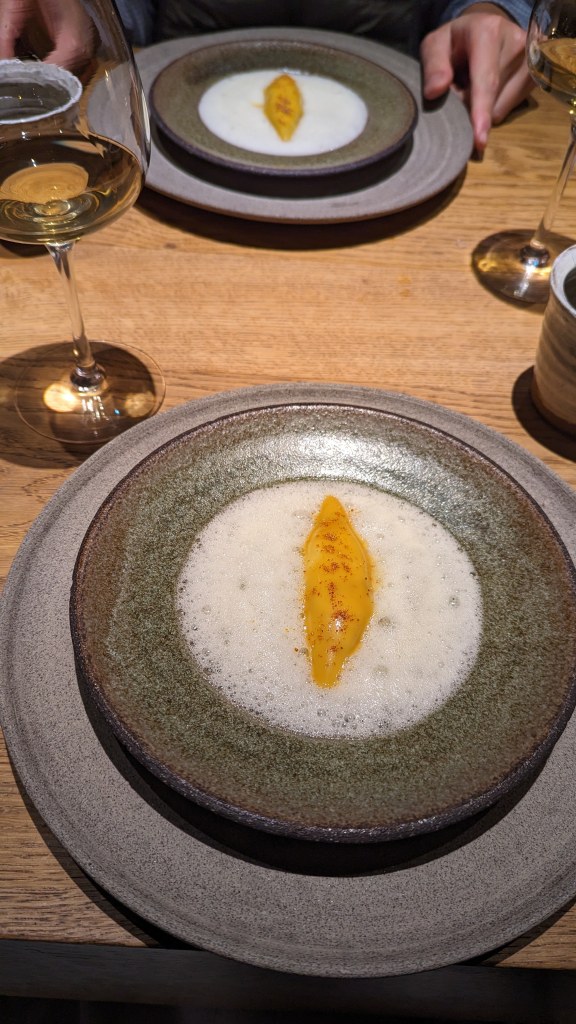
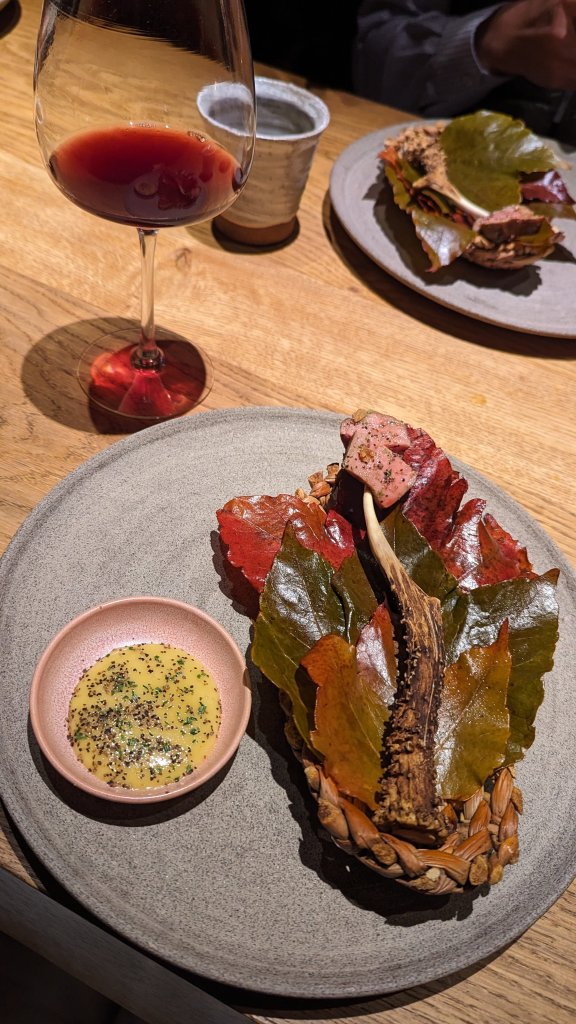
The menu didn’t feature lots of carbs or classic „Sättigungsbeilagen“ such as potatoes, dumplings or pasta but I was more than fine with it. While I love carbs in everyday life, the lack thereof made the 15 courses more than manageable and I walked out of Noma feeling nicely fed but not stuffed.
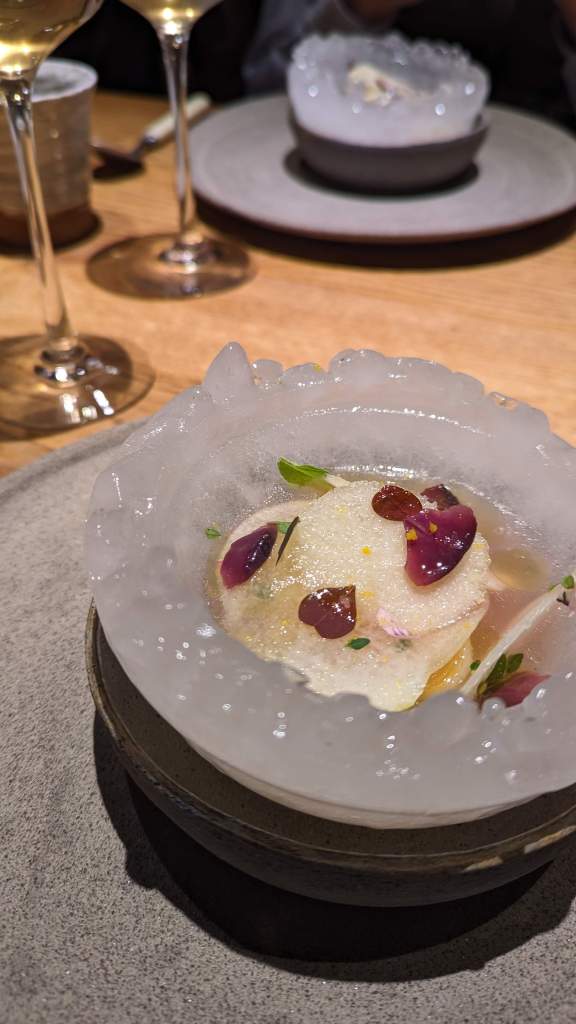
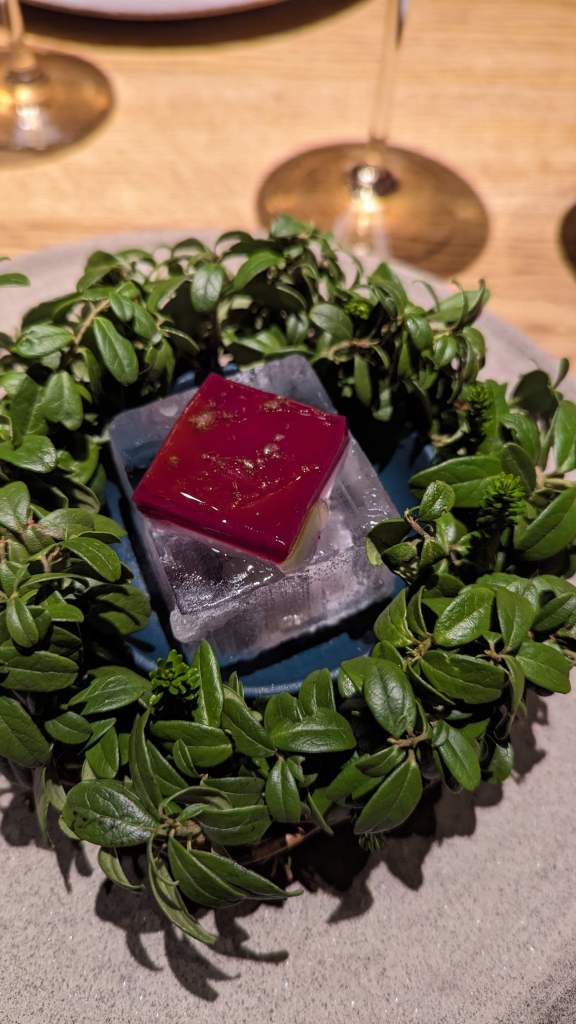
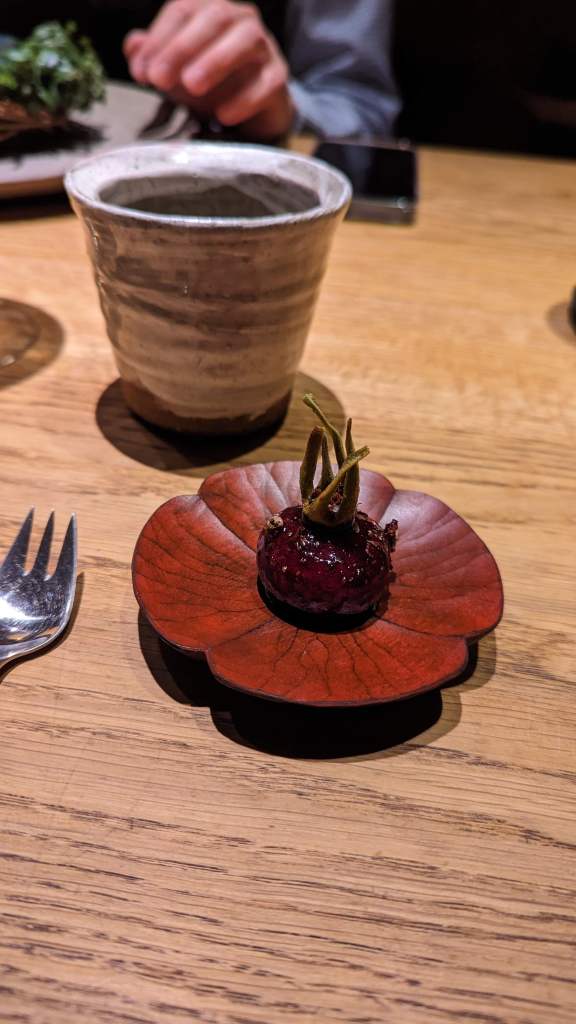
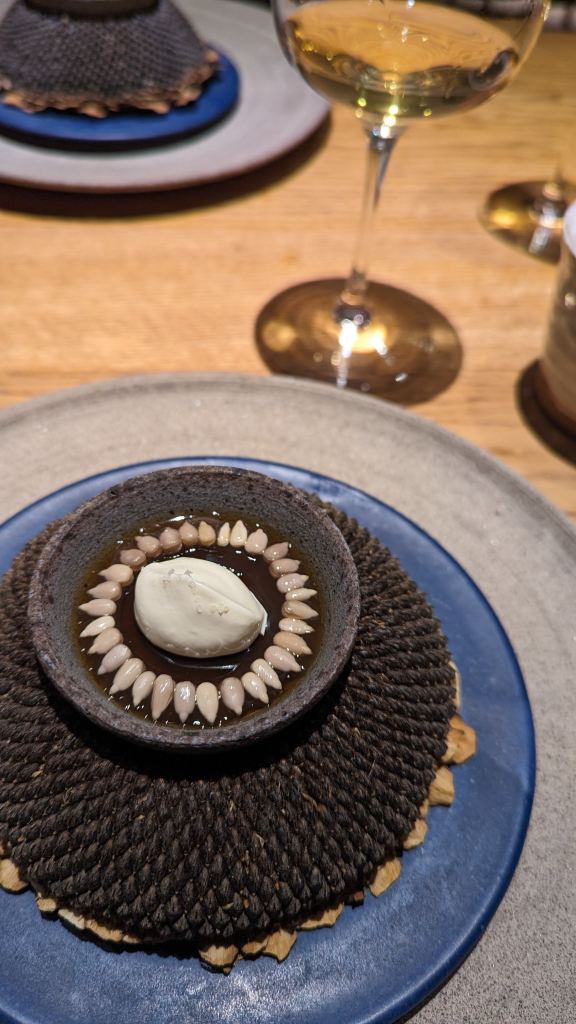
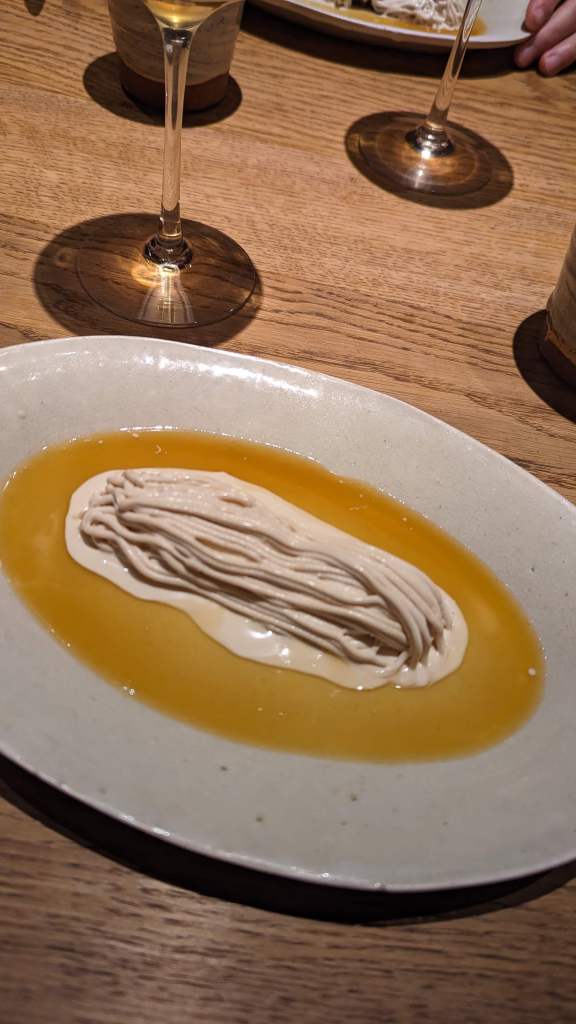
Noma is frequently criticized for being too overcomplicated and overly intellectual at the cost of taste. I would not agree with this as most dishes weren’t just complex but also quite tasty. The sauces added rich sweetness and umami, the meats were perfectly cooked and succulent and berries or pickles brought tartness and acidity to the dishes. To my surprise, I found some of the desserts to be most memorable, especially something that looked like a very sloppy version of „Spaghetti-Eis“ that every local ice cream dealer would be ashamed to serve. It was indeed hazelnut ice cream served with a caramelly sauce and candied chanterelle mushrooms – also a nice nod to the very first course featuring the sweet hazelnutty dipping sauce.


Drinks and Service
The wine pairing at Noma comes at the hefty price of 2,000 DKK (roughly 270 Euro) – a price not even the Danish alcohol tax can justify. However, on the communal table it is obligatory to book either wine or juice pairing. While I was also contemplating opting for the juice pairing, I couldn’t really bring myself to pay around 200 Euros for a few glasses of juice and so I went with the wine. (Doesn’t really make sense but that’s how my brain works.)
One thing to say about the wine pairing: I was pleasantly surprised that water and coffee where included in the pairing. Throughout my Copenhagen trip, it happened to me several times that a bottle of water or a basket of sourdough was put down on my table and I thought it was complimentary. In the end, those items popped up on the bill. Also, in the end I ordered an after dinner cocktail (chocolate washed whisky with mushroom garum) and I was already bracing myself for a hefty price tag but it came in at 23 Euro, which I found quite reasonable under these conditions. But back to the wine…
I am not a wine expert at all and can only classify them into 3 categories:
- I like the wine
- I don’t like the wine
- the wine is so boring that I do not really have an opinion on it
At Noma, I was happy that most of the 7 wines fell into the first category. The wines were mainly natural wines, which I like a lot because I do not mind a little funk in the glass and I am always a bit disappointed that this trend hasn’t really made its way to Germany yet. (An Australian diner told me that natural wines are slowly taking over Down Under. So I guess, it will only take another 7 to 10 years, until they reach German bars.)
Service at Noma was top-notch and so the wine glasses were always refilled. I am certainly not used to that from German fine dining, where you are really lucky if you get a little top up. A fellow diner told me that he had made the same experience in Germany and he claimed that it is the only country, where the waiters are holding back on wine and would let you sit in front of an empty glass for ages. His trick to avoid this: He would drink the first glass of wine really quickly and see if and how soon it was refilled. If it wasn’t refilled, he would take his time with the wines (or simply order an additional bottle to go with the pairing). If it was, he wouldn’t hold back and drink at his normal pace. I think it’s a trick, I will adopt.
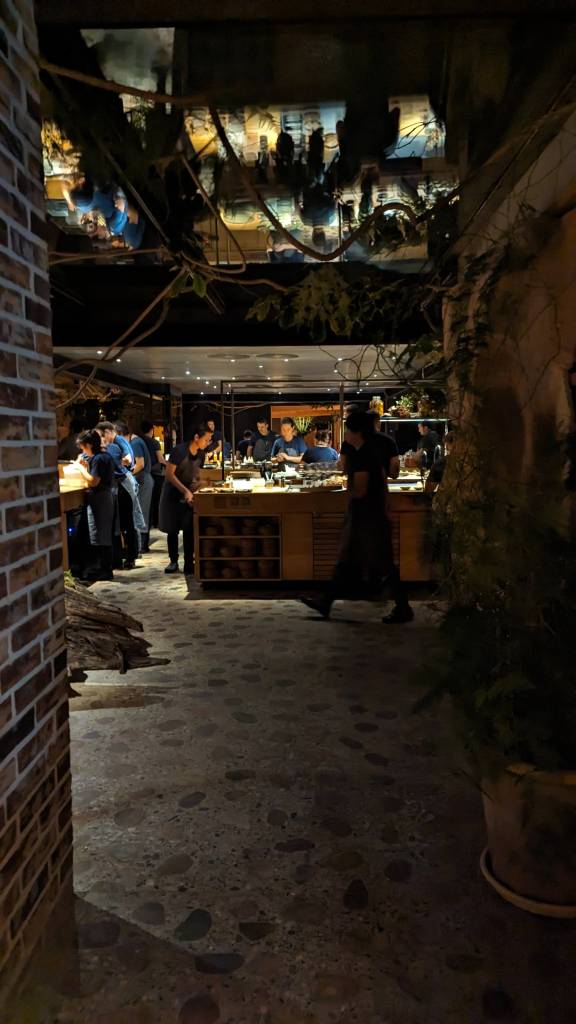
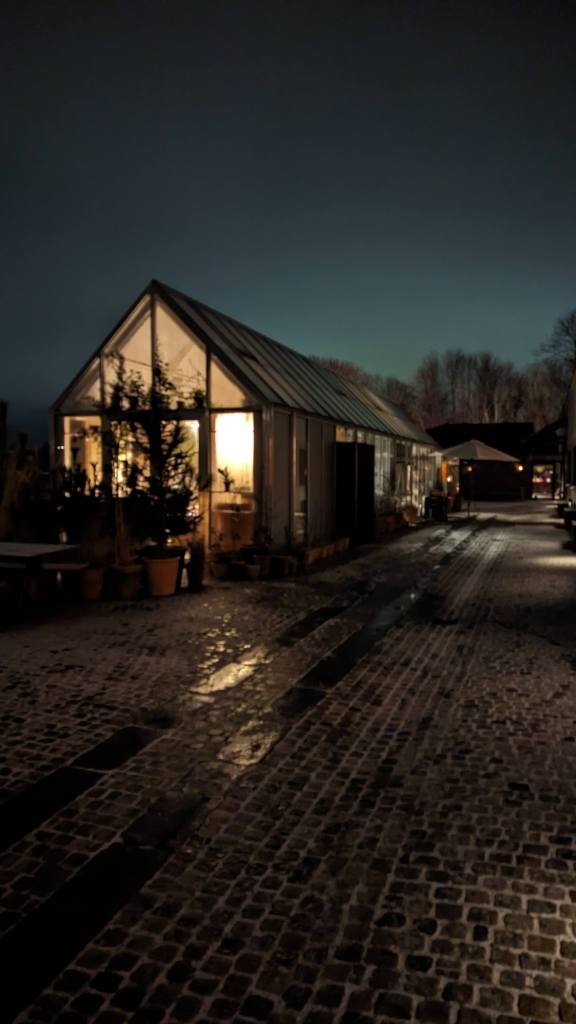
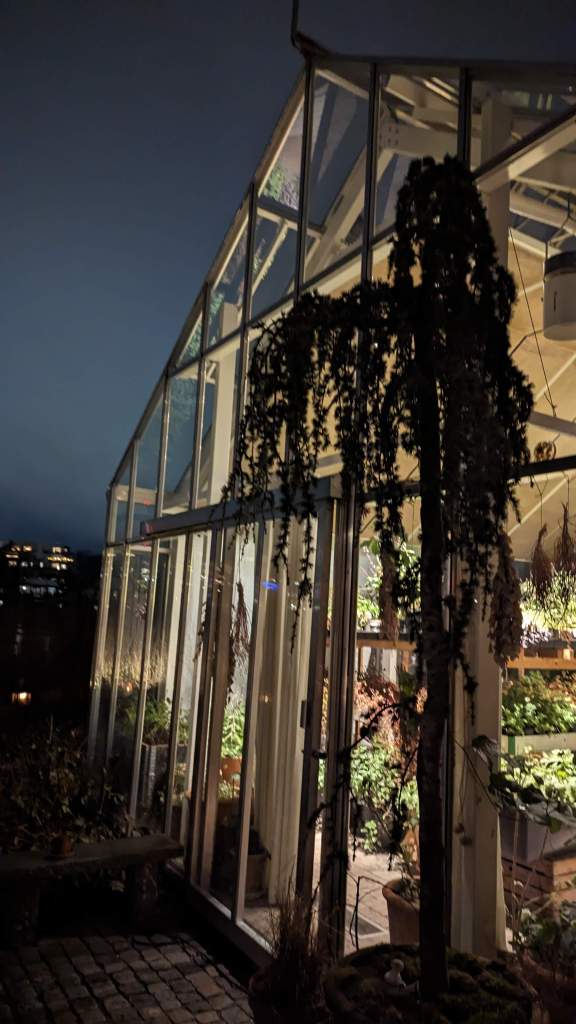
I have been to restaurants, where everything is orchestrated like clockwork and where every single diner would be served the same dish at the same time. At Noma, it was different. Before entering the restaurant, you were asked to wait in a cosy greenhouse sitting in front of a fire place and having some tea. The individual groups are then asked to enter one after the other, which leads to a more relaxed atmosphere in my opinion. All the waiters took their time explaining the dishes to us and where happy to answer questions about all sorts of topics, including working at Noma. I also had the feeling that this approach reduces the number of staff needed a tiny bit. The only downside to it: Some tables were ahead in the menu and it was therefore less of a surprise what was coming next. We tried not to listen and look though, which worked well most of the time.
Overall Experience
Noma is special and everyone in there knows it. Sitting down at the communal table, the waitress’s first words were: „So, where has everyone travelled from?“ And the question was more than apt as everyone on the table had specifically come to Copenhagen just for Noma. Our illustrous group featured a doctor from Hong Kong currently staying in Newcastle, a UK expat now living in Aarhus and a private investigator who had come all the way from Australia to dine at Noma.
As in New York, the communal table experience really added to my night. When you stick a bunch of foodies at a shared table in the world’s best restaurant, the conversation quickly turns into a gastronomic dick-measuring contest: „I have been to Geranium last week.“ – „Well, I have been there tree times!“ – „I went to Eleven Madison Park.“ – „Before or after they went plant based??“ (In a foodie world, this apparently makes a difference. 2 points for veggie EMP, 3 points for the „original“ EMP.)
While I have eaten at a decent number of Michelin starred restaurants, the night’s „big dick award“ clearly went to the guy sitting next to me. He casually explained that he had quite a troublesome year facing the most first world problem, I had ever heard of: Every year on his birthday, he would invite 30 of his best friends to a Michelin starred restaurant but unfortunately he had been to every single one in his area. But don’t fret! He obviously found a solution: He simply got in contact with Denmark’s No. 1 gastronomic consulting agency who basically consult all of the country’s fine dining temples and asked them to create a bespoke birthday menu for him and his close friends. (I naturally asked him whether our shared Noma experience would make me one of the chosen few but he said no. Rude!)
Is Noma Worth It?
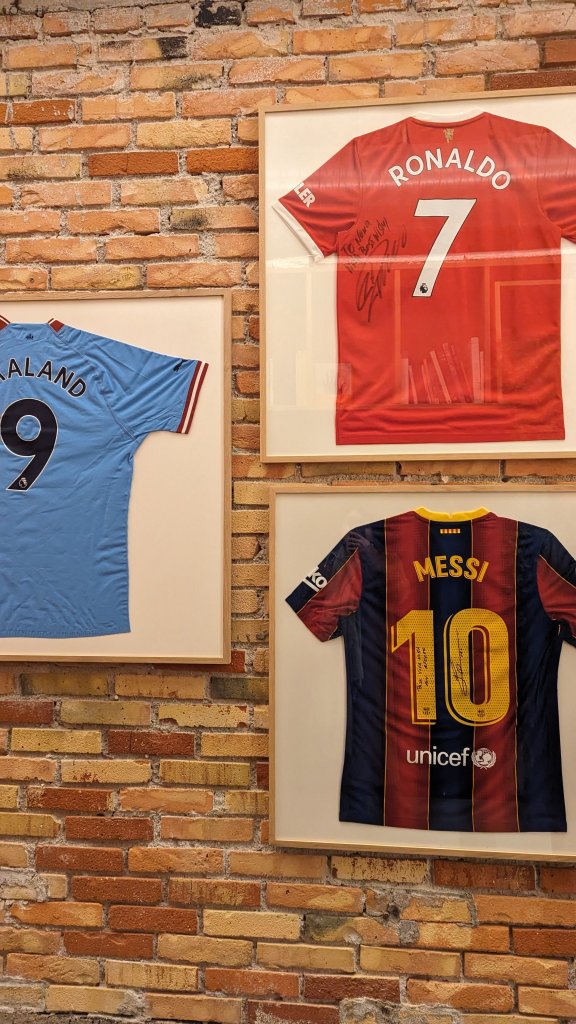
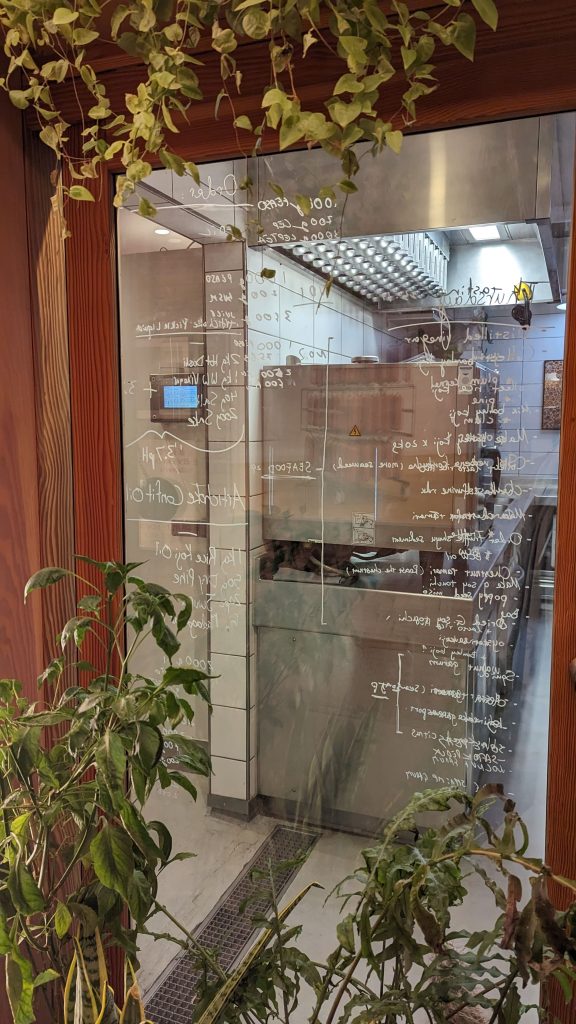
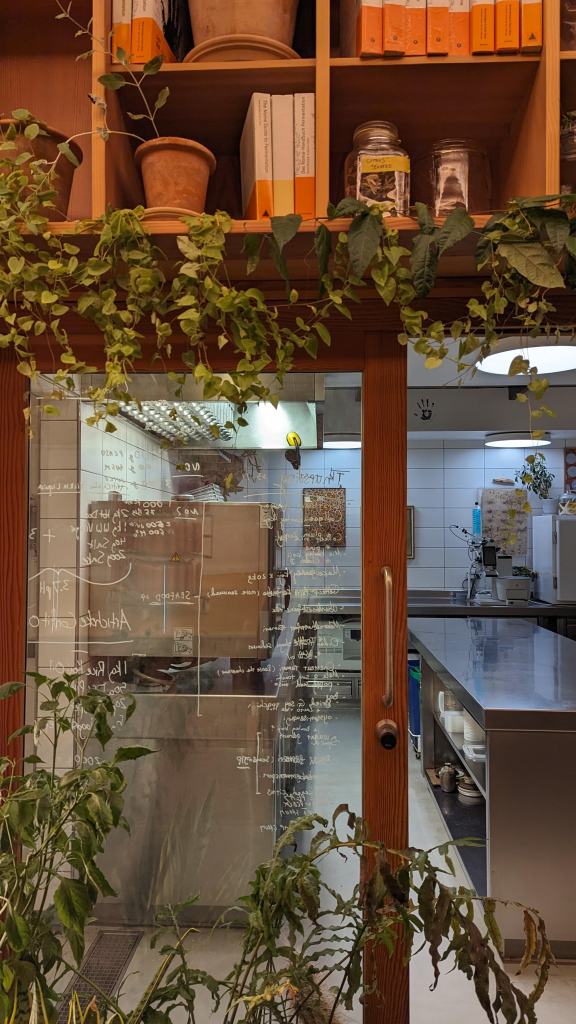
My night at Noma cost me about 850 Euros (including tip and the after dinner cocktail). I had better food for less money but I was very aware that I would pay for the price and the bragging rights of saying „I have been to Noma!“ (a clear trump card in my next culinary bragging contest). What made it worth it, however, is the overall experience: Noma is like no other restaurant in that it is a culinary trailblazer not only having put nordic cuisine on the map but also having changed the face of fine dining forever. And this feeling of being in a very special and unique place was present all night long. From nerdy table discussions about past Noma menus or Noma pop-ups to geeking out over the little restaurant tour we got after dinner. In the end, I walked home – with my little Noma goodie bag in hand – with a much lighter wallet but without any sense of regret.

 Couch Potato Chronicles
Hinterlasse einen Kommentar